 In this experiment, you will learn how to extract DNA from strawberries. DNA is short for
In this experiment, you will learn how to extract DNA from strawberries. DNA is short for
In this experiment, you will learn how to extract DNA from strawberries. DNA is short for
In this experiment, you will learn how to extract DNA from strawberries. DNA is short for
In this experiment, you will learn how to extract DNA from strawberries. DNA is short for
 In this experiment, you will be exploring how to build the strongest and tallest structures using gummy candy and toothpicks. Try to think about which shapes would make your tower more sturdy and strong. When you are done, test how many books you can stack on top of your tower before it breaks.
 In this experiment, we will be creating worm-like structures using polymer-science. By reacting sodium alginate with calcium chloride, we can turn a liquid solution into a jelly-like solid.
 With this project, you can make your own (temporary) lava lamp with household materials! It's easy and safe, and it looks very cool.
With this project, you can make your own (temporary) lava lamp with household materials! It's easy and safe, and it looks very cool.
With this project, you can make your own (temporary) lava lamp with household materials! It's easy and safe, and it looks very cool.
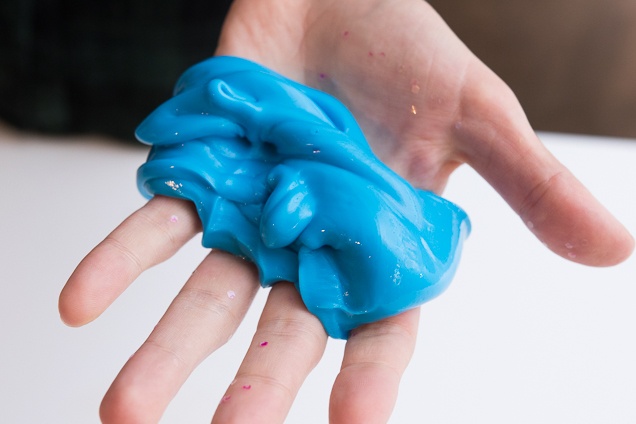 In this experiment, we will learn how to make slime. Slime is a polymer made from glue and borate ions. It is "non-newtonian" because it is both a solid and a liquid. If you pull it apart quickly, applying a large force, it becomes very viscous and will break in half. However, without any force, it flows like a liquid.
In this experiment, we will learn how to make slime. Slime is a polymer made from glue and borate ions. It is "non-newtonian" because it is both a solid and a liquid. If you pull it apart quickly, applying a large force, it becomes very viscous and will break in half. However, without any force, it flows like a liquid.
In this experiment, we will learn how to make slime. Slime is a polymer made from glue and borate ions. It is "non-newtonian" because it is both a solid and a liquid. If you pull it apart quickly, applying a large force, it becomes very viscous and will break in half. However, without any force, it flows like a liquid.

